Sump & Basement
Sump Pump Installation: Pit, Discharge, Power and Permits
The pump you buy matters less than whether the pit, the discharge line and the circuit around it are done right. Most sump pump failures trace back to one of those three.
By Tim Parker — Reads the spec sheets and prices the full install
A correct sump pump installation gets four things right: a pit sized to hold enough water between cycles, a discharge line that carries water well clear of the foundation and cannot freeze shut, a check valve installed the right way round, and a dedicated, GFCI-protected circuit that nothing else shares. Skip any one of them and the pump itself stops being the weak link.
Pit and basin: sizing it so the pump doesn't short-cycle
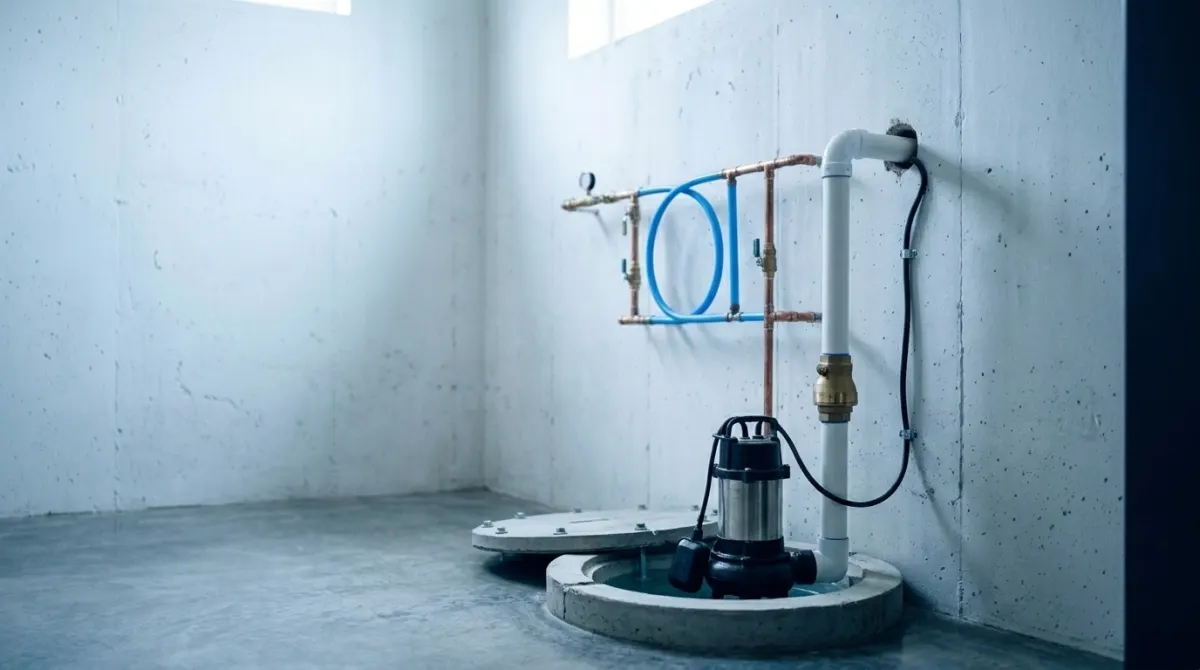
The basin sets the terms for everything installed into it. Diameter decides whether a submersible pump physically fits with clearance for a tethered float to swing freely without catching the wall — a float pinned against the side by an undersized pit will either never trip or never release. Depth and volume decide how long the pump runs per cycle: too small a basin means dozens of short starts an hour during heavy rain, and starts are what wear a motor out faster than continuous running would. A sealed, gasketed lid is worth the extra cost — it cuts basement humidity and radon entry, and on a radon-mitigated house it is often part of the mitigation system itself. The pump should rest on solid support inside the pit, not loose gravel, because silt stirred up from underneath is what eventually jams an impeller.
Discharge routing: getting the water actually away from the house
The entire point of the pump is defeated if the discharge dumps water right back toward the foundation. The line needs to run downhill, away from the house, and terminate far enough out that the water cannot pool and re-enter through the same drain tile it just left. Where it discharges onto a slope, a splash block or a buried extension pipe to daylight keeps it from eroding a trench back toward the wall over a few seasons. Check local code before tying into a storm sewer or a shared drainage easement — some jurisdictions prohibit it outright, and a shared swale that floods a neighbor's yard is the kind of problem that gets a complaint filed.
Any run of pipe that sits above ground or passes through an unheated space needs freeze protection built in. A discharge line that ices shut in January backs water straight into the pit with nowhere to go, and it is one of the most common cold-weather callouts for this system. Keep the exposed run short, slope it so it drains rather than holding a standing puddle of water that then freezes, and consider a freeze-relief fitting on the vertical section near the pump — it opens under backpressure and lets water escape onto the basement floor instead of flooding it from a burst pipe, which is the lesser evil by a wide margin.
Check valve orientation: the one part installed backwards constantly
A check valve lets water travel one direction and stops the column standing in the discharge pipe from falling straight back into the pit the moment the pump shuts off. The arrow cast into the valve body points the direction water should flow — away from the pump. Get it backwards and the motor runs continuously against a sealed line, moving nothing and overheating in the process. Mount it as close to the pump as practical, on the vertical section of pipe where possible, so the standing column it holds back is short. A valve installed too far away leaves a long column of water free to slam back down and hammer the fitting every cycle.
Power: dedicated circuit, GFCI, and the outage question
A sump pump belongs on its own dedicated circuit, and most local codes require GFCI protection for a basement outlet in a location that can get wet. Sharing a circuit with a shop vacuum, a freezer, or basement lighting means an unrelated GFCI trip — or an overloaded breaker — takes the pump offline during exactly the storm it exists for. Check the specific dedicated-circuit and GFCI requirements with your local code, since they vary by jurisdiction, and confirm the outlet is on a circuit that stays live even if other basement loads trip. None of this protects against a whole-house power outage, which is what a battery backup is for.
DIY versus hiring it out, honestly
A straight swap of an existing pump into an existing basin, with the discharge line and outlet already in place, is realistic for anyone comfortable disconnecting a union fitting and lifting a submersible pump out of a pit. Unplug, disconnect, lift the old one out, set the new one in, reconnect, test with a bucket of water. Where it stops being a homeowner job is anything that touches new wiring, cutting a basin into an existing slab, tying into drain tile, or routing a new discharge line through a wall or foundation. That combination of electrical work in a wet space and code-compliant routing is exactly where hiring a licensed plumber or electrician is worth the labour line. Many jurisdictions also require a permit for new electrical circuits or a storm-drain discharge tie-in — confirm with your local building department before starting, not after.
Sizing the pump itself is a separate question from the install details above — horsepower, submersible versus pedestal, and cast iron versus thermoplastic all matter, and the decisive number is flow rate at your actual lift height, not the figure printed on the box. A 3/10 HP cast-iron unit like the Zoeller M53 covers most existing-pit installs; a high water table or a deep pit calls for the 3/4 HP Wayne CDU980E; the Superior Pump 92541 at 1/2 HP is the budget cast-iron option for a straight swap.
Where installation fits in the rest of the system
Installation is one piece of the full sump pump picture — sizing logic, component breakdown and battery backup are covered on the sump & basement guide. If the pump is already in and misbehaving rather than absent, sump pump repair covers the four checks that diagnose most no-pump calls. And what the whole job costs, parts and labour both, is broken down on sump pump cost.
Questions owners actually ask
Where should sump pump discharge water go?
Far enough from the foundation that it cannot drain straight back toward the pit — most guidance points to at least 10-20 feet away, and further if the yard is flat. Discharging onto a neighbor's property, into a shared drainage swale that floods it, or directly into a storm sewer without checking local code are the three ways this step goes wrong. A splash block or a buried extension to daylight at grade both work; what matters is the endpoint is downhill and away.
Which way does the check valve go?
The arrow cast into the valve body points away from the pump, in the direction water is supposed to travel. Install it backwards and the pump runs continuously against a closed line and moves nothing. It should sit close to the pump, on a vertical run where possible, so the column of water it is holding back is as short as possible.
Does the discharge line need to be freeze-protected?
Yes, anywhere the line runs above ground or through an unheated space before it reaches daylight. A frozen discharge is one of the most common winter callouts — the pump runs, the water has nowhere to go, and it backs up into the pit. Sloping the exterior run so it drains rather than holds standing water, and keeping the above-ground portion short, are the usual fixes; some installs add a freeze-relief fitting that lets water escape if the outlet ices over.
Does a sump pump need its own circuit?
A dedicated circuit is standard practice, and many local codes require it along with GFCI protection in a basement location. Sharing a circuit with other basement outlets is how a tripped GFCI from an unrelated appliance takes the pump offline during the exact storm it was needed for. Confirm the requirement with your local code before wiring, since GFCI and dedicated-circuit rules vary by jurisdiction.
Can I install a sump pump myself?
A straight swap into an existing pit, with the outlet and discharge line already in place, is within reach for most people comfortable with a pipe wrench and a union fitting. A first-time install is a different job: it usually means cutting the slab, setting a basin, tying into drain tile, and running new wiring — that combination is where hiring a licensed plumber or electrician earns its cost, both for code compliance and for getting the discharge routed correctly the first time.
Do I need a permit to install a sump pump?
Often, yes, particularly where the discharge ties into a storm drain or where new electrical circuits are added. Requirements vary widely by city and county, so check with your local building department before starting rather than after an inspector finds unpermitted work during an unrelated visit.