Sump & Basement
Sump Pump Not Working:
fix it, reset it, or replace it
Most dead pumps are not dead. Four checks in the pit tell you whether you are buying a $20 part or a new unit.
By Tim Parker — Reads the spec sheets and prices the full install
Before any sump pump repair, run four checks: power at the outlet, the float switch, the impeller by hand, and the check valve. A stuck float or failed valve causes most no-pump calls; both are cheap parts.
Sump pump not working: the float switch is the first suspect
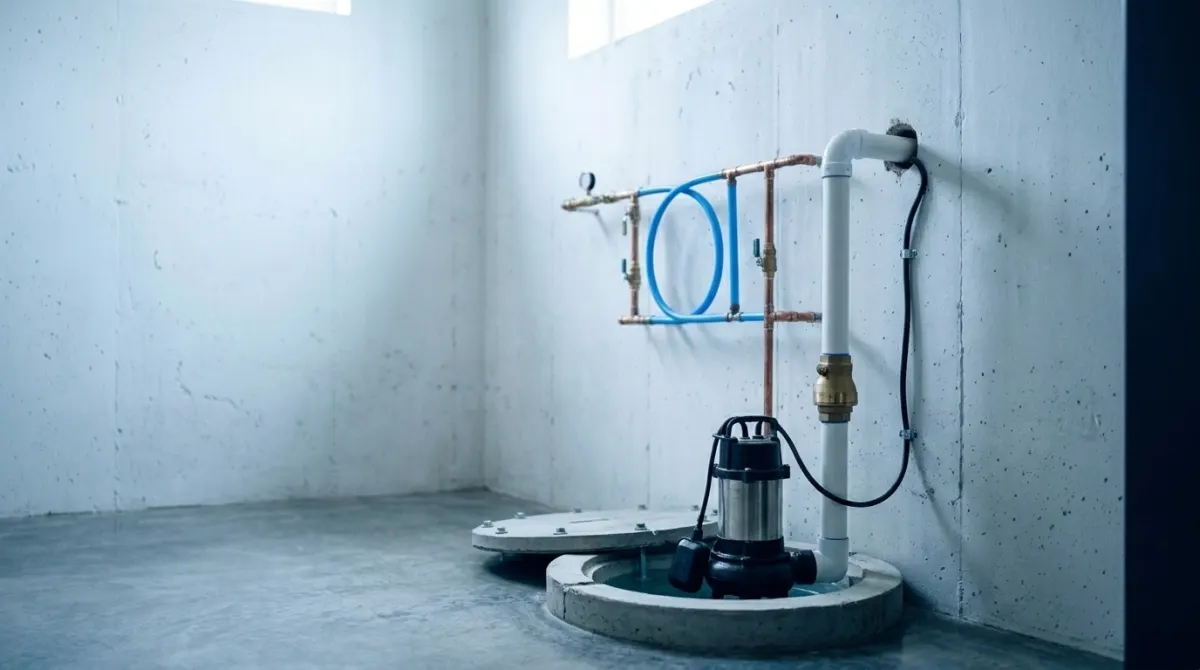
The float is the part that decides when the motor runs, and it is the part that fails most. Pour a bucket of water into the pit and watch what happens. A healthy unit starts within a couple of inches of the float rising and stops cleanly as the level drops back down. If nothing happens, unplug the pump and plug a lamp into the same outlet before you condemn anything — tripped GFCIs in basements are common enough that checking takes thirty seconds and saves an hour. If the outlet is live, look at the float itself. Tethered floats snag on the pit wall, get wrapped in the power cord, or hang up on a discharge pipe that was set slightly off-centre. That is a mechanical problem you fix with your hands, not a part you buy. Only when the float moves freely and the pump still ignores it is the switch actually dead.
Vertical float switches are more forgiving in a narrow pit because they travel straight up a rod instead of swinging on a tether. If you are on your second or third switch in the same pit, the geometry is probably the real problem and a vertical unit is the fix. Whatever you install, set the shut-off level so the impeller housing stays submerged. Running dry, even briefly at the end of each cycle, is what cooks the seals and turns a switch problem into a motor problem a season later. Cord routing matters as much as the switch you buy. Run the power lead up one side of the pit and secure it, so it cannot drift into the float's swing path the next time the water churns. Leave enough slack that nothing is under tension when the pump settles, and never let the cord bear any of the pump's weight. Setting the pump on a brick also keeps grit out of the impeller.
Check valve failure: the water that keeps coming back
A check valve sits in the discharge line and lets water go one way. When the pump stops, the column of water standing in that pipe wants to fall back down, and the valve is the only thing holding it. When the valve fails, all of that water returns to the pit, the float rises again within a minute, and the pump starts over. That is short cycling, and it will wear a motor out faster than the flood you were worried about. You can usually hear it: a loud clunk right after shut-off, then the unit restarting far too soon. Replacing the valve is a straightforward job on a union-fitted discharge — drain the line, cut in the new valve with the arrow pointing away from the pump, and check for weep. Get the direction wrong and the pump will run continuously and move nothing at all.
Sump pump maintenance that prevents the 2 a.m. call
The whole routine takes about fifteen minutes twice a year, and it catches nearly everything before it becomes water on the floor. Pour a bucket in and confirm the pump starts and stops at the levels it should. Lift the unit out and clear the inlet screen — gravel, drywall crumbs, and pet hair build a mat over it slowly enough that you never notice the flow dropping. Look for sediment in the bottom of the pit and scoop it out, because that grit is what eventually jams an impeller. Walk the discharge line all the way to where it exits and confirm nothing has nested in it and that it still carries water away from the foundation rather than back toward it. Test the backup, if you have one, by unplugging the primary. Note the install date somewhere you will find it again.
Add a high-water alarm if the pit does not have one. It is inexpensive, it runs on a battery, and it turns a catastrophic finished-basement failure into an inconvenient evening. Do not mute one that keeps sounding. An alarm tripping during storms and only during storms is telling you the pump cannot keep up with peak inflow, which is a sizing conversation, not a false alarm. Work out the inflow before buying a bigger unit: time the refill with the pump unplugged, measure the pit, and you have a rough gallons-per-minute figure to size against. Compare that against the flow curve on the nameplate at your real discharge height, not the headline number on the box, because lift costs you capacity. Position the alarm float above the pump's start level and below the point where the pit overflows, so it warns you with time left to act rather than confirming what the wet carpet already told you.
Repair or replace, and what sump pump replacement cost looks like
The decision is mostly about age. Under about five years, fixing a switch, a valve, or a jammed impeller is clearly worth it — those are wear items on an otherwise sound unit. Past roughly eight years, a motor or impeller failure means you are spending real money on something already near the end of the seven-to-ten-year service life manufacturers commonly cite. Replace it instead. Between those two ages, let the failure decide. Switches and valves are consumables at any age and worth fixing. A seized motor, a cracked housing, or a seal that has let water into the windings is the end of that unit. One more factor tips the maths toward replacing: labour is most of the bill either way. Paying a plumber to install a twenty-dollar float into an eight-year-old pump, then paying the same call again in a year for the pump, costs more than doing it once.
| Job | Typical parts range | Typical installed range | DIY realistic? |
|---|---|---|---|
| Float switch | $20–$60 | $150–$350 | Yes, if no wiring is involved |
| Check valve | $10–$35 | $150–$300 | Yes, on a union-fitted line |
| Clear jammed impeller | $0 | $120–$250 | Yes |
| Full pump swap, same size | $120–$400 | $450–$1,200 | Yes, if the outlet already exists |
| Battery backup added | $250–$600 | $700–$1,600 | Partly — battery yes, wiring no |
Every figure above is a typical range, not a measured price. Labour rates vary widely by metro, emergency and after-hours calls sit well above the top of these bands, and a pit that needs a new dedicated circuit or a re-routed discharge line is a different job with a different number. Get two quotes in writing before you agree to anything during a storm. The pattern in that table is how little separates the installed cost of the small fixes, because a service call has a floor regardless of the part in the van. That is the argument for learning the four checks at the top of this page: they cost nothing to run, and they are what tells you whether you need anyone at all. It is also the argument for batching work. If the pump is coming out anyway, that is the moment to replace the check valve and add the alarm, not a separate visit six months later at full price again.
If the motor is seized, the housing is cracked, or the pump is past that seven-to-ten-year mark and needs parts anyway — this one is done, replace it. For a straight swap in an existing pit, a 3/10 HP cast-iron unit like the Zoeller M53 covers the default case; a high water table or a deep pit that outran the old pump calls for the 3/4 HP Wayne CDU980E; and the Superior Pump 92541 at 1/2 HP is the budget cast-iron option. Full sizing guidance, including why the GPH number on the box is measured at zero lift, is on the sump & basement buying guide.
Replacing the pump is also the moment to add backup, if the basin has never had one — see why a battery backup matters and which units are worth it on the sump & basement pillar.
Where the pit fits in the rest of your water system
A pit that runs constantly is usually collecting groundwater, and groundwater is the same water your well and your treatment equipment are dealing with. If yours smells of sulfur or leaves orange staining on the pit walls, that is iron and it is worth understanding before it reaches anything else — iron in well water covers the forms and the fixes, and Well Water, Fixed maps the whole treatment train. On the household side, hard water is the other symptom that shows up in the same houses; our softener picks, the head-to-head comparisons, and the full review index are the next stop if that is what you are actually solving. The pit and the treatment train are separate systems that happen to share a water table, so do not let a plumber sell you one as the cure for the other.
Questions owners actually ask
Why is my sump pump running but not pumping water?
The motor is fine and something in the water path is not. The three usual causes are a check valve installed backwards or stuck shut, an impeller jammed with gravel or a chunk of debris, and a discharge line frozen or blocked outside. Unplug the pump, pull it out of the pit, and turn the impeller by hand — if it will not move freely, that is your answer. If it spins clean, walk the discharge line to the exterior outlet and look for ice or a nest.
How do I know if the float switch has failed?
Fill the pit with a bucket of water and watch. The pump should kick on within a couple of inches of the float rising and shut off cleanly as the level drops. A switch that has failed will either do nothing while the water keeps climbing, or run on after the pit is empty, which burns the motor. Also check that the float is not simply pinned against the pit wall or tangled in the power cord — a mechanical hang-up looks identical to a dead switch and costs nothing to fix.
What does it mean when the sump pump alarm keeps going off?
A high-water alarm means the level in the pit rose past the point the pump should have handled, so either the pump is not keeping up or it is not running at all. Treat it as urgent rather than as a nuisance to mute. Check power at the outlet, test the float with a bucket, and look at whether the discharge is actually moving water. Alarms that trigger only during heavy storms usually mean the pump is undersized or the check valve is letting water fall back into the pit each cycle.
How often should a sump pump be replaced?
Manufacturers commonly cite a service life in the range of seven to ten years for a residential pump, and pumps in high-water-table basements that cycle constantly reach the end of that range sooner. Age alone is a reason to plan rather than to panic. If a pump older than about eight years needs a motor or a new impeller, replacement is usually the better spend, because you are putting parts into a unit that is already near the end of its expected run.
Can I replace a sump pump myself?
A straight swap of the same size pump into an existing pit is within reach for most people who own a pipe wrench: unplug, disconnect the union on the discharge, lift the old unit out, set the new one in, reconnect, and test with a bucket. Where it stops being a homeowner job is anything that touches wiring, a pit that needs a dedicated circuit or a GFCI outlet added, or a discharge line that has to be re-routed. Electrical work in a wet basement is exactly the place to hire a licensed pro.
Does a battery backup pump make the main pump last longer?
It does not extend the main pump's life — it covers the failure mode the main pump cannot cover, which is a power outage during the storm that is filling your pit. Grid failures and heavy rain arrive together often enough that the primary unit being in perfect health is no protection at all. Think of it as insurance against the outage, not as a way to split duty with the pump you already own.
Why does my pump turn on and off every few minutes?
That is short cycling, and it wears a motor out faster than heavy continuous use. The most common cause is a failed check valve letting the water in the discharge pipe drain straight back into the pit, so the float rises again immediately. Other causes are a float set too low for the pit depth, a pit that is too small for the incoming water, and a discharge line so short that gravity returns the water to the same place. Fix the cycling before you replace the pump, or you will wear out the new one too.