Verdict: BUY for combined problems · Score 88/100
SpringWell Combo Systems:
filter + softener bundle specs and cost
SpringWell's CF+SS and WS+SS bundles solve chlorine, hardness, iron, and sulfur in one plumber visit. The math on when a combo beats piecemeal — and when it's just extra equipment you didn't need.
By Tim Parker — Reads the spec sheets and prices the full install
What the combos are
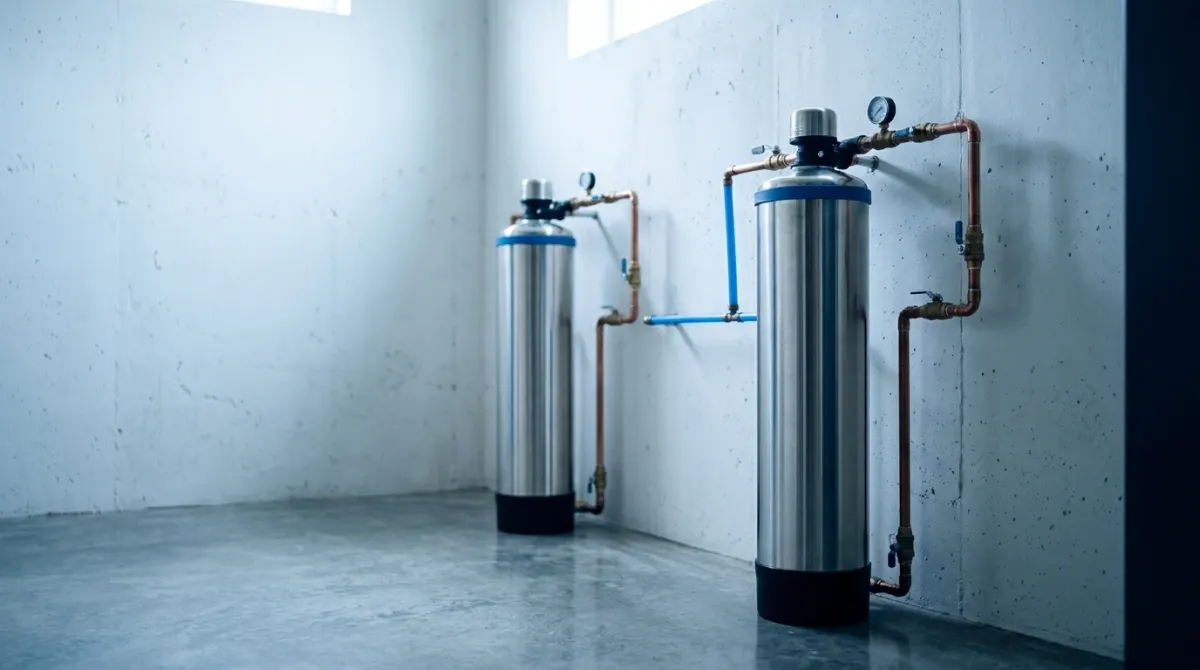
SpringWell offers two combo configurations. The CF+SS pairs the city-water catalytic carbon filter (CF series) with the salt-based softener (SS series) — the right bundle for municipal water households with both chlorine and hardness. The WS+SS pairs the well-water air-injection iron/sulfur filter (WS series) with the softener — the bundle for wells carrying iron, sulfur, and hardness simultaneously.
Each bundle ships as a coordinated set with compatible bypass valves and a single control harness. The systems are installed sequentially on the main line: filter first, softener second. That order is not optional — it protects the softener resin from the contaminants each filter is designed to remove.
We earn nothing if you buy through this link — the manufacturer sells it directly and we are not in their programme.
The install economics
This is the core argument for a combo. A licensed plumber charges a trip fee — typically $150–$300 — before touching a fitting. Two separate system purchases mean two installation appointments, even if you stagger them six months apart. The bundle eliminates one visit, one permit application, and the logistical overhead of coordinating two separate projects.
| Scenario | System price | Install work | What drives the difference |
|---|---|---|---|
| CF1 + SS softener, separate installs | Not published — verify at springwellwater.com | Two visits, two trip fees, two scheduling windows | You pay the plumber's trip charge twice and coordinate two projects |
| CF+SS combo bundle | $2,250 | One visit, one trip fee, one permit | Same two tanks, one appointment — the labor saving is the whole argument |
| WS1 + SS softener, separate installs | Not published — verify at springwellwater.com | Two visits, plus a backwash drain line for the WS1 | The drain run and the electrical outlet add labor the CF pairing doesn't need |
| WS+SS combo bundle | Not published — verify at springwellwater.com | One visit, drain line run once | Same drain and electrical work, done in a single trip |
The one price above — $2,250 for the CF+SS bundle — was read from SpringWell's own product page on 25 July 2026. The other rows stay blank because they depend on prices we have not read: a standalone softener, and the separate WS+SS bundle. SpringWell also runs frequent sitewide sales, so check the current figure before you buy, and get the labor quote locally — install labor varies by region and plumbing complexity.
CF+SS: city water with hardness
The CF+SS is the right call when your water test shows hardness above 7 gpg and you also want chlorine and taste handled. Installed in the correct order — carbon filter on the supply side, softener downstream — the CF removes chlorine and chloramines before they reach the softener resin. This matters because chlorine degrades ion-exchange resin over time; unprotected resin loses capacity faster and needs replacement years ahead of schedule.
| Component | Spec | Our read |
|---|---|---|
| CF filter media life | 1,000,000 gallons (catalytic carbon + KDF) | ~10 years for family of four — no media replacement decade |
| CF service flow | 9 GPM (1–3 bath size) | Two concurrent showers + laundry, no pressure drop |
| SS softener grain capacity | Per manufacturer's published size tiers | Size to household water usage — SpringWell publishes a sizing calculator |
| Salt efficiency | Per manufacturer's published specs for SS series | Demand-initiated regeneration conserves salt vs. timer-based systems |
| Certification scope | Component-level certifications; system performance not NSF-listed as a bundle | Same caveat as individual systems — components certified, not the combined unit |
WS+SS: well water with iron and hardness
The WS+SS handles the most common multi-problem well scenario: iron or sulfur plus hardness. The WS air-injection filter oxidizes dissolved iron (ferrous) and hydrogen sulfide, converting them to filterable particles that the media bed captures. Hardness minerals that pass through then hit the softener. The critical point: iron must be removed before reaching softener resin. Even modest iron levels — above 0.3 ppm — foul resin rapidly, destroying capacity and forcing early replacement. A WS+SS combo with proper sequencing prevents this.
| Component | Spec | Our read |
|---|---|---|
| WS iron ceiling | Up to 7 ppm ferrous iron | Above 7 ppm requires professional sizing and possibly a two-stage approach |
| WS hydrogen sulfide ceiling | Up to 8 ppm H₂S | Handles the typical "rotten egg" range in residential wells |
| WS service flow | 12 GPM rated | Higher than CF — air-injection tank is larger by design |
| WS manganese | Per manufacturer's published specs | WS media handles manganese — confirm specific ppm ceiling with SpringWell for your test results |
| Drain line required | Yes — both WS backwash and SS regeneration | Two drain connections; plan plumbing accordingly before quoting install |
Installation: what one visit actually covers
Main line placement. Both systems go on the supply side, after the meter shutoff but before any branch to the water heater. The filter must precede the softener — do not reverse the order. If your main shutoff is a gate valve (common pre-1990), budget to upgrade it to a ball valve at the same appointment.
Drain connections. The CF carbon filter does not backwash and requires no drain. The WS iron filter backwashes on a timer and needs a drain line. The SS softener regenerates on demand and also needs a drain line. If the install location has one floor drain, confirm with your plumber that both drain lines can be routed to it — typically yes, with a simple Y fitting, but the detail matters.
Control valves. Each system has its own control valve and timer/demand sensor. The WS regeneration schedule and the SS regeneration demand setting are configured independently. Your plumber or SpringWell support can walk through the initial setup, but note that both systems will periodically use water for backwash and regeneration — factor this into your water bill estimate.
Bypass valves. Install all bypass valves — the ones SpringWell includes with the systems. You will need them for the twice-yearly sediment prefilter swap and for any future service. Skipping bypass valves to save an hour is the most common DIY regret in owner forum posts.
Who should NOT buy a combo
Single-problem households.If your water test shows hardness but no chlorine/taste issue, or chlorine taste but no hardness, buy the single system that solves the problem. A combo adds capital cost, installation complexity, and ongoing operating cost (softener salt, extra drain water for regeneration) for a problem you don't have.
PFAS as the primary concern. Neither combo addresses PFAS at whole-house flow rates with a certified NSF P473 listing. If PFAS reduction is your documented priority, the correct protocol is a whole-house catalytic carbon system (the CF layer of the combo) plus a certified under-sink reverse osmosis system at the kitchen tap — not a softener. The softener adds hardness reduction, not PFAS coverage. See the PFAS guide and certified under-sink RO review.
Iron above 7 ppm.Above the WS1's published ceiling, a single-tank air-injection system may not fully treat the water. This requires professional sizing — sometimes a two-stage oxidation/filtration approach — before a softener makes sense downstream.
Ten-year cost of ownership
We can price the running costs but not the systems, so treat this as two separate numbers rather than one total. On the running side, the CF+SS adds sediment prefilter replacements ($25–$40/yr, roughly $250–$400 over ten years) plus softener salt, which varies with hardness and household size — budget $100–$300/yr for a typical family. That is the entire consumable bill: the carbon and softening media are not annual replacement items. To that, add whatever springwellwater.com is charging for the bundle today and your plumber's quote for a single install visit. The WS+SS carries the same salt and prefilter pattern, plus the electricity and backwash water the air-injection tank uses.
Verdict — 88/100
BUY if you have both filtration and hardness problems. Skip if you only have one.
The combo earns its premium when the installation savings and bundle pricing offset the cost of equipment you actually need. Test your water first — hardness below 7 gpg doesn't need a softener, and without that problem the combo is extra spend. For city water: start at the CF1 review. For well water: start at the WS1 review. For hardness basics: salt-based vs. salt-free softeners explained.
Questions owners actually ask
Is it worth getting a whole house water filter and softener combo?
For households with both chlorine/taste problems and hard water (typically 7+ grains per gallon), a combo bundle usually delivers a better all-in cost than two separately purchased and installed systems. The main saving is installation: one licensed plumber visit, one permit if required, one bypass assembly. The breakeven against separate purchases depends on the installer's trip charge — typically $150–$300 per visit — which a bundle eliminates. If you only have one problem (hard water OR poor taste, not both), a combo adds equipment you don't need.
Should the water softener come before or after the whole house filter?
For SpringWell CF+SS combos on city water, the carbon filter goes first, then the softener. This order protects the softener resin from chlorine and chloramine degradation — chlorine attacks and breaks down ion-exchange resin over time, shortening its service life. The filter removes chlorine, then the softened water runs through the house. For well water WS+SS combos, the order is sediment prefilter → iron/sulfur oxidation filter → softener, because iron and manganese will foul softener resin if they reach it untreated.
Do I need both a water filter and water softener?
Only if you have both problems. A softener handles hardness (scale, soap film, appliance wear) but does not remove chlorine, taste, odor, or VOCs. A carbon filter handles chlorine, taste, and odor but does nothing for hardness. Test your water first: hardness above 7 gpg typically warrants a softener; chlorine taste and odor on city water warrants a carbon filter. Many households need both, which is why combo bundles exist.
What is the lifespan of a SpringWell combo system?
The filter component's catalytic carbon media is rated for approximately 1,000,000 gallons — roughly 10 years for a family of four. The softener resin in the SS series is designed for the same long service life under normal conditions, though resin life is shortened by iron above 0.3 ppm (which is why iron must be addressed before the softener on well water). The sediment prefilter is the only regularly replaced consumable, typically every 6–9 months. SpringWell publishes a lifetime warranty on tanks and valves.
We earn nothing if you buy through this link — the manufacturer sells it directly and we are not in their programme.